
Leer en español: Español🚨Impuestos a la Propiedad en Queens NY: Lo que Pagan los Propietarios y Cómo Reducirlos
Ask any Queens homeowner about the expense that surprised them most, and property taxes come up fast. New York City runs its own tax system — different from Nassau or Suffolk County — with four tax classes, assessment caps, and exemptions most buyers never hear about until after closing. Here is how it works, and the ways to shrink the bill.
How New York City figures your property tax
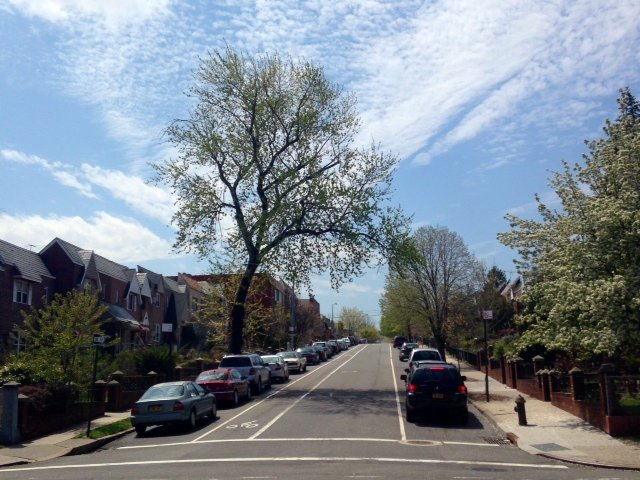
The City sorts every property into one of four tax classes. Class 1 covers one- to three-family homes — the brick semis of Glendale, the Colonials of Bayside, the two-family houses of East Elmhurst. Class 2 covers co-ops, condos, and rental buildings, from the garden co-ops of Jackson Heights to the condos of Long Island City.
Your class sets both your rate and how your home is assessed. Per the NYC Department of Finance’s FY2026 schedule, Class 1 owners get the system’s lowest effective rate: homes are assessed at 6% of market value with annual increases capped (6% per year, 20% over five years) — so a neighbor who bought in 1995 often pays far less than someone who bought the same style of house last spring. Class 2 owners (co-op and condo shareholders) face higher effective rates, offset by the abatement program below.
What Queens homeowners typically pay
Bills vary by property type, assessed value, and how long the home has been held. A Queens-focused 2026 property-tax guide puts typical Class 1 annual bills in the $5,500 to $11,000 range across south-Queens ZIPs like Ozone Park, Jamaica, and Howard Beach — higher near the Rockaways. Long-held homes sit below these ranges thanks to the caps; recently sold homes trend toward the top, since sales trigger reassessment toward market value. The tax figure on a listing is a snapshot, not a promise: budget for a fresh assessment after purchase.
Exemptions that lower your bill
Basic STAR. Primary-residence homeowners with federal AGI under $250,000 get the School Tax Relief benefit — new applicants receive it as a STAR credit check. Enhanced STAR gives owners 65+ a bigger benefit; for 2026–2027 the income limit is $110,750.
Senior (SCHE) and Disabled (DHE) exemptions. SCHE cuts assessed value 5% to 50% for owners 65+ on a sliding income scale up to $58,399 — incomes of $50,000 or less get the full 50%. DHE works the same for owners with qualifying disabilities, at any age. One or the other, not both.
Veterans exemptions. Wartime service earns a 15% assessed-value reduction (capped at $2,880 for Class 1 homes); combat-zone service adds another 10%; a service-connected disability adds relief equal to half the disability percentage.
The co-op and condo tax abatement
Under state Real Property Tax Law §467-a, primary-residence co-op and condo owners get a partial abatement that reduces the tax bill itself: 28.1% for buildings averaging $50,000 or less per unit, 25.2% for $50,001–$55,000, 22.5% for $55,001–$60,000, and 17.5% above $60,000, through fiscal year 2026.
The catches: primary residence only; no more than three units in the building; no LLC ownership; and it cannot stack with J-51 or 421-a benefits. Your building’s board files one application for everyone — miss the deadline (February 23, 2026 for the 2026–27 tax year) and no unit gets the abatement that year.
New in 2026: the Pied-à-Terre surcharge
On May 28, 2026, Governor Hochul signed the state budget creating a recurring annual Pied-à-Terre surcharge on secondary residences, effective July 1, 2026. In the first phase (through June 2028), one- to three-family homes worth $5 million or more face surcharges of 0.8% to 1.3% — on top of the existing mansion tax, estimated to raise about $500 million a year for city infrastructure. For the typical Queens buyer this changes nothing.
How to check — and challenge — your assessment
Before you appeal, apply for an exemption, or sign anything a tax-grievance company puts in front of you, look up your own property class and assessed value at the Department of Finance’s assessment portal (a836-pts-access.nyc.gov). If the number looks wrong, appeal to the NYC Tax Commission — calling 311 connects you to Finance agents who walk through your bill at no charge. Most exemption applications are due mid-March for benefits starting July 1 (March 16, 2026 for SCHE and DHE in the 2026–2027 tax year). Miss it and you wait another year.
The team at Empire Fine Homes helps buyers across Queens, Brooklyn, and Long Island understand the true carrying costs of every home for sale in Queens before they make an offer. Call 917.554.0546 and let’s talk through your numbers.
Related reading: our guide to closing costs in Queens NY and our overview of down payment assistance programs for first-time buyers.