
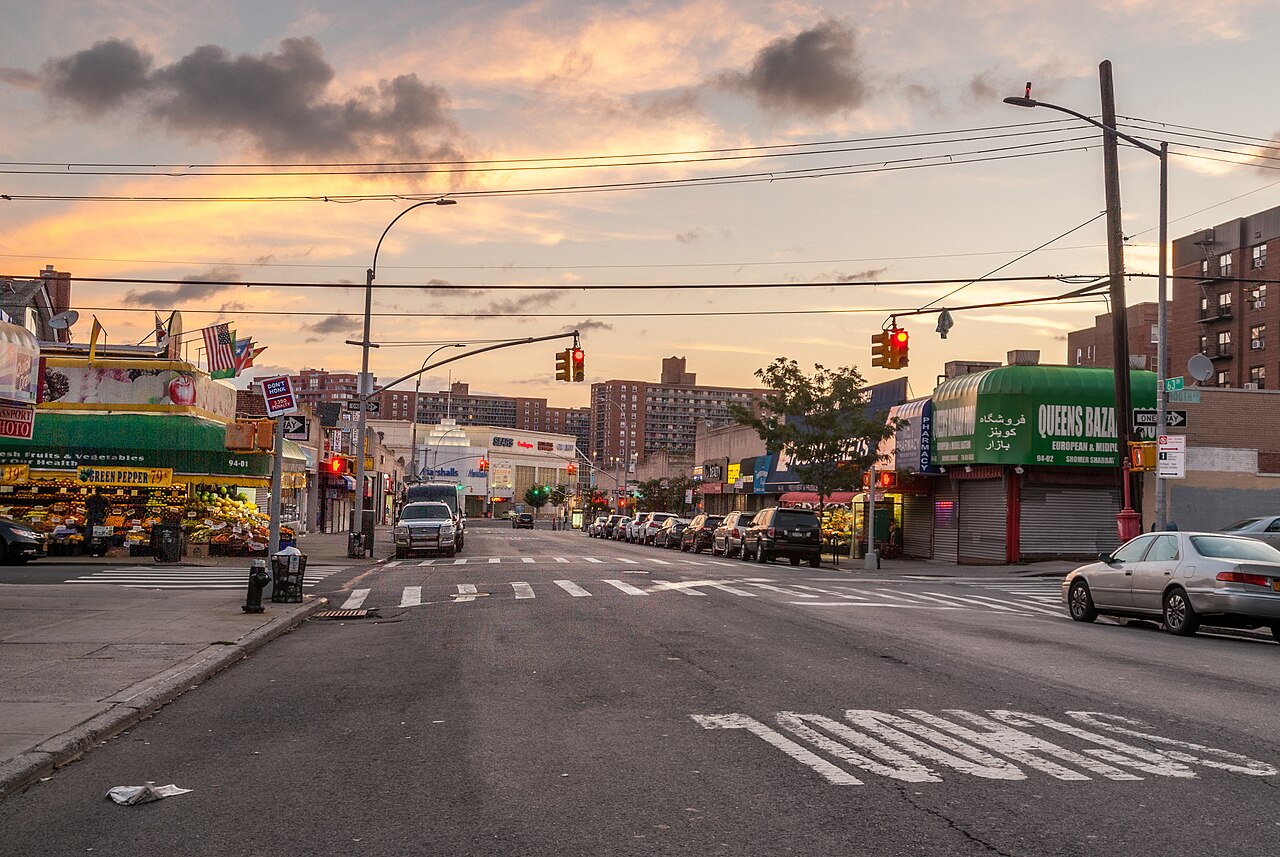
Tucked between Forest Hills and Elmhurst in central Queens, Rego Park is one of the borough’s best-kept secrets for buyers. It shares a border and school district with Forest Hills, but homes here typically cost less per square foot, and the M and R trains and everyday shopping make it an easy place to live. If you are shopping for a home in Queens NY and want value without giving up the commute, Rego Park deserves a close look. Lea esta guía en español
What a Home Costs in Rego Park Right Now
Rego Park is a co-op market first. According to PropertyShark’s Q3 2026 data, the median sale price across all home types was $410,000, down 5.7% year over year, on 69 deals, at $715 per square foot. By type: co-ops $300,000 (42 sales), condos $483,000 (17), houses $1,000,000 (10).
OneKey MLS data for the year through October 27, 2026, from the DeVito Team, agrees: single-family homes $999,000, condos $530,000, co-ops $315,000. Co-ops are the most active segment — 142 closed sales — and with a $328,000 median asking price, about 71 days on market, and 114 active listings, they are a strong buyer’s market right now.
Per Reinvent NY’s early-2026 Rego Park guide, one-bedroom co-op resales generally run $280,000 to $520,000, and two-bedrooms $450,000 to $750,000, before maintenance. Condos, which are scarcer here, typically command a premium of about 15 to 20 percent over comparable co-ops.
The Housing Stock: Co-ops Rule Here
Rego Park’s housing splits into two eras. Interior streets — Wetherole, Booth, and the blocks south of Queens Boulevard — hold 1920s and 1930s brick rowhouses and low-rise pre-war co-ops. Along Queens Boulevard, postwar high-rises and newer condo buildings, such as The Alexander and Regal, rise above the shops. South Rego Park is quieter, with detached brick homes and row houses on tree-lined streets.
Co-ops dominate: PropertyShark counts about 5,183 co-op units here, against 2,127 condos, 1,821 single-family homes, and 1,048 two-to-four-family homes. Buying a co-op means buying shares in a corporation, not real property — which brings board approval, financial disclosure, and often a flip tax at resale. Board review typically takes four to eight weeks, so build that time into your plans.
Monthly carrying costs deserve the same attention as the price. In older co-ops here, maintenance commonly runs $800 to $1,600 a month depending on amenities and the building’s underlying mortgage, per Gadura Real Estate and Reinvent NY. Ask for the building’s financials, any pending assessments, and the flip-tax schedule before you offer.
Transit and Daily Life
Transit is Rego Park’s strongest asset. The M and R trains stop at 63rd Drive on Queens Boulevard, and the E and F express trains at 71st–Continental Avenue in Forest Hills are a short walk from the neighborhood’s eastern edge. From Forest Hills station, the Long Island Rail Road reaches Penn Station in about 14 minutes. The DeVito Team rates Rego Park a Walk Score of 84 and a Transit Score of 100.
Daily life centers on 63rd Drive’s shops and restaurants, plus Queens Center Mall and Rego Center on Queens Boulevard. The neighborhood is in school District 28, the same as Forest Hills, but zoned schools vary by address — verify the zoned school for a specific property before you commit.
Who Rego Park Fits Best
Rego Park fits first-time buyers who like Forest Hills but not its prices, buyers who want more space per dollar, and anyone who values a straightforward commute. It also draws investors: rental demand near the 63rd Drive station is steady, with typical rents of $1,900–$2,300 for studios, $2,300–$2,900 for one-bedrooms, and $2,800–$3,600 for two-bedrooms (Reinvent NY, early 2026). Co-op sublet rules can limit renting a unit out, so read the building’s house rules first. If flexibility matters more than price — the freedom to sublet, to buy as a pied-à-terre, or to close quickly — a condo may suit you better than a co-op, even at the premium.
Tips for Buying in Rego Park
Start with a mortgage pre-approval and a budget that includes maintenance, not just principal and interest. Ask your agent for the co-op’s flip tax, underlying mortgage, and planned assessments, and have a New York-licensed real estate attorney review the board package before you sign. Compare buildings side by side: two similar apartments can carry very different monthly charges. If you are weighing a co-op against a condo, walk both — the difference in board rules, not just price, often decides it.
Rego Park rewards prepared buyers: well-priced homes near the 63rd Drive station move, and a complete board package with strong financials stands out where co-ops give buyers real negotiating room.
Thinking about buying a home in Rego Park, Queens NY? Call Empire Fine Homes at 917.554.0546. We will show you the co-ops, condos, and houses that fit your budget, explain the board process in plain language, and help you make an offer with confidence.
🏡 Never Miss a New Queens Listing
Get new listings & weekly open houses in your inbox — free, every week.